
A private kindergarten is an independent early-learning program for kids aged 4 to 6, with smaller classes, a flexible curriculum, and more one-on-one attention than public kindergarten. Sending your child to elementary school can build stronger academic skills, better social habits, and a smoother first-grade start. If you want a warm, personal setting, a private kindergarten like First Friends Preschool is worth a look.
Choosing the right kindergarten for your child is one of the biggest early-education decisions you will make as a parent. Public school, private kindergarten, homeschool, there is a lot to weigh. If you have been searching for “private kindergarten near me” or wondering whether a private program is really worth it before your child starts elementary school, this guide will walk you through everything you need to know.
At First Friends Preschool, we have helped many families prepare their little ones for a strong, confident start to school. The same questions come up again and again, so let us break them down in plain English.
What Is a Private Kindergarten?
A private kindergarten is an early-childhood education program for children typically aged 4 to 6, run independently of the public school system. Unlike public kindergartens, private programs set their own curriculum, hire their own teachers, and follow their own teaching style. That can be Montessori, play-based, Reggio Emilia, faith-based, or a mix of these.
A good private kindergarten usually offers:
- Smaller class sizes (often 10 to 15 children per teacher)
- A flexible, child-centered curriculum
- Extra subjects like art, music, foreign language, and early STEM
- Half-day, full-day, or extended-care schedules
- A strong focus on social and emotional growth alongside academics
In short, a private kindergarten is a personal stepping stone between preschool and elementary school.
Private Kindergarten vs. Public Kindergarten: What Is the Difference?
Both options aim to prepare children for first grade, but they go about it differently.
- Class size. Private kindergartens usually have fewer students per teacher, which means more one-on-one attention.
- Curriculum. Public kindergartens follow state-set standards. Private programs can adapt the curriculum to fit each child’s pace and interests.
- Teaching style. Private kindergartens often offer special approaches like hands-on learning, project-based work, or character-building lessons that are not always available in public schools.
- Schedule. Many private kindergartens offer half-day, full-day, and extended-care options that fit working families.
- Cost. Public kindergarten is free; private kindergarten has tuition. For many parents, the smaller environment, broader curriculum, and added attention make the cost worth it.
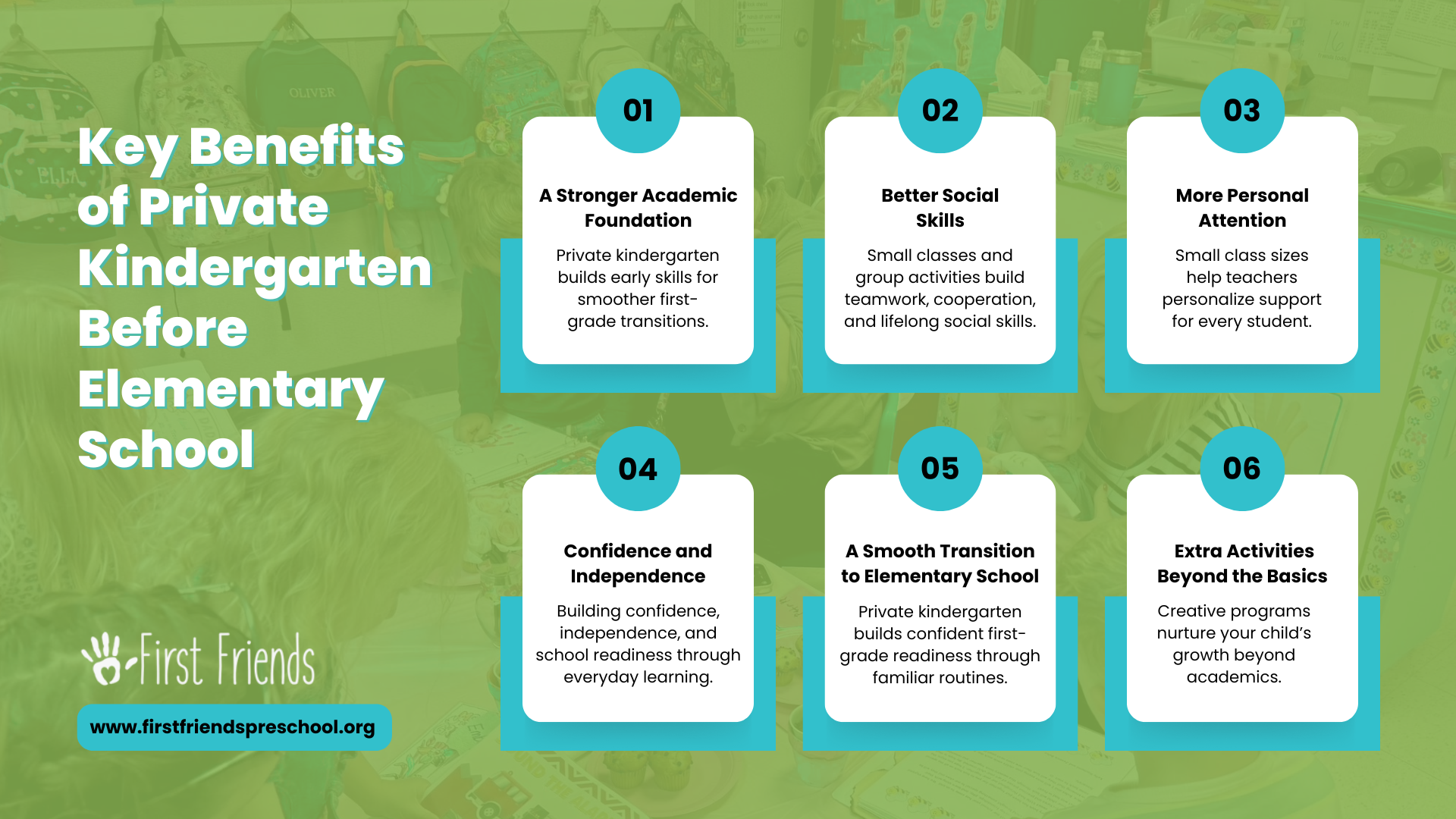
Key Benefits of Private Kindergarten Before Elementary School
Sending your child to a private kindergarten before they enter elementary school can give them a real head start. Here are the biggest benefits parents notice.
1. A Stronger Academic Foundation
Children in private kindergarten are gently introduced to reading, writing, early math, science, and sometimes even basic coding or a second language. That early exposure makes the jump to first grade much smoother.
2. Better Social Skills
With smaller classes and planned group activities, kids learn how to share, take turns, work through small conflicts, and cooperate as part of a team. These are skills they will lean on for life.
3. More Personal Attention
Lower student-to-teacher ratios let teachers spot strengths and challenges early. If your child needs extra help with letters or is racing ahead in math, the program can flex to match.
4. Confidence and Independence
Private kindergartens spend real time on self-help skills, decision-making, and the kind of quiet confidence that helps a child walk into elementary school ready to take part.
5. A Smooth Transition to Elementary School
Structured days, classroom routines, group lessons, and simple homework habits all begin in private kindergarten. By the time your child enters first grade, “school” already feels familiar and friendly.
6. Extra Activities Beyond the Basics
From music and movement to gardening, yoga, and art time, private programs often go beyond the academic minimum to help your child grow in every way.
What to Look for in a Good Private Kindergarten
Not every program is the same. When you are comparing private kindergartens near you, keep these points in mind:
- Licensing and accreditation. Make sure the school meets your state’s safety and education standards.
- Teacher qualifications. Early childhood training and experience matter a lot at this age.
- Class size and student-teacher ratio. Smaller groups generally mean more attention.
- Curriculum style. Does it line up with your family’s values?
- Daily schedule. A healthy mix of play, learning, rest, meals, and outdoor time.
- Safety, cleanliness, and security. Visit in person if you can.
- Parent communication. How often will you hear how your child is doing?
- Reviews and word of mouth. Other parents tell you a lot.
At First Friends Preschool, we welcome family tours so you can see our classrooms, meet our teachers, and ask every question on your list before you decide.
Signs Your Child Is Ready for Private Kindergarten
Most children are ready for kindergarten between the ages of 4 and 6, but readiness is about more than the calendar. Look for these signs:
- Can follow simple directions
- Enjoys being around other children
- Can separate from parents without a big upset
- Shows curiosity about letters, numbers, and books
- Can focus on an activity for short stretches
- Manages basics like using the bathroom and washing hands
If most of these sound like your child, they are likely ready to do well in a private kindergarten classroom.
How Private Kindergarten Prepares Children for Elementary School
For a child who has never been in a structured classroom, first grade can feel like a big jump. Private kindergarten bridges that gap. Children get comfortable with:
- Sitting at a table and listening to a teacher
- Raising their hand and taking turns to speak
- Working both on their own and in small groups
- Carrying their own backpack and keeping track of their things
- Following a full school-day schedule
By the time they walk into elementary school, the classroom feels familiar, and that comfort frees them to focus on actually learning.
Is Private Kindergarten Right for Your Family?
Every family is different. A private kindergarten is a great fit if you want smaller classes, a personal curriculum, extra activities, and a calm, planned start to your child’s school life. If your child needs more attention than a large classroom can offer, or if you want a specific teaching style, private is often the better path.
If budget is a concern, ask about half-day options, sibling discounts, or scholarship programs. Many private kindergartens have flexible plans for working families.
Why Parents Choose First Friends Preschool
First Friends Preschool offers a warm, caring private kindergarten program built to give children the academic, social, and emotional skills they need for a confident start to elementary school. With caring teachers, small class sizes, and a balanced curriculum that blends play, structured learning, and extra activities, we have been a trusted choice for local families for years.
Parents love that we:
- Keep classes small and personal
- Focus on kindness and character alongside academics
- Offer flexible scheduling for busy families
- Keep open, regular communication with parents
- Provide a safe, clean, and joyful environment every day
To learn more about our private kindergarten program or to schedule a tour, visit firstfriendspreschool.org or give us a call. We would love to meet your family.
Frequently Asked Questions
At what age should my child start private kindergarten?
Most children start private kindergarten between the ages of 4 and 6, depending on their birthday and readiness. At First Friends Preschool, we look at each child as an individual to recommend the right starting point.
Is private kindergarten really worth the cost?
For many families, yes. Smaller classes, a richer curriculum, more one-on-one attention, and a smoother transition to elementary school all add lasting value that parents feel is worth the tuition.
What is the difference between preschool and private kindergarten?
Preschool generally serves children aged 2 to 4 and focuses on early socialization and play-based learning. Private kindergarten is the next step, usually for ages 4 to 6, with more structured lessons that prepare children for first grade.
Will my child still go to public elementary school after private kindergarten?
Yes. Many of our families choose private kindergarten as a head start, then move on to public elementary school. Children leave us ready for whichever path their parents pick.
How do I choose the best private kindergarten near me?
Tour a few schools, ask about teacher training, class size, daily schedule, and curriculum. Read reviews, talk to other parents, and trust how the school feels during a visit. The right place will feel right for your child.
Final Thoughts
Sending your child to a private kindergarten before elementary school isn’t a must — but it can make a real difference. Smaller classes, personalized teaching, a strong academic foundation, and plenty of room to grow socially can set a child up for a confident first day of first grade and beyond.
If you’re looking for a private kindergarten that feels like a second home, schedule a visit with First Friends Preschool. We’d love to show you around, answer your questions, and help your child take the next happy step toward elementary school.