
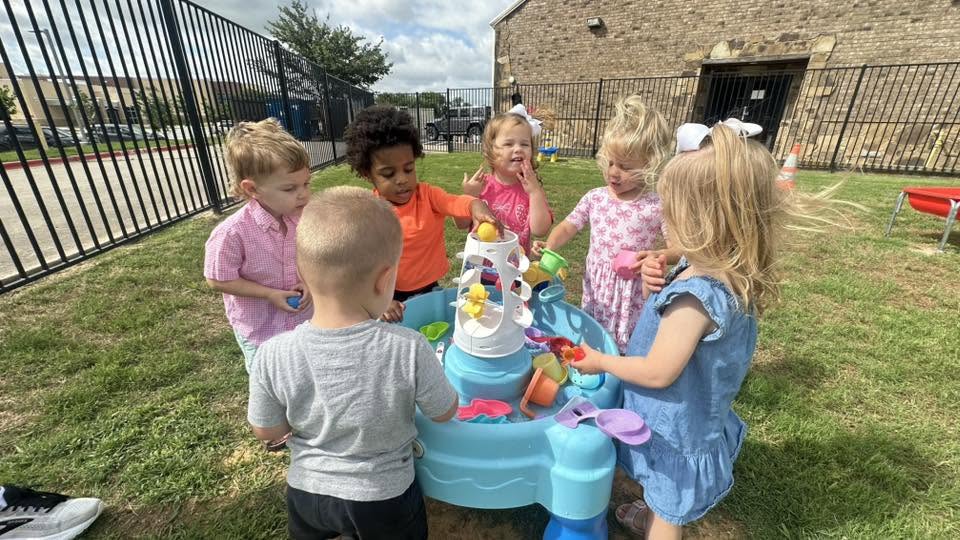
To pick the right preschool, start with the things that shape your child’s day most: teacher warmth and turnover, the adult-to-child ratio, safety and cleanliness, the daily routine, and whether the school’s values match your family’s. The smartest move when you choose a preschool in Prosper is to visit in person, watch how teachers talk to the kids, and ask direct questions about staffing, discipline, and what a typical day looks like. Cost and location matter too, but they should not outrank a calm classroom and caring staff. Tour at least two or three schools, so you have something to compare. Pay attention to how you feel walking the halls. If the children seem happy and busy, and the teachers greet your child by getting down to their level, that is a strong sign. Trust both the checklist and your gut.
Why Does the Right Preschool Matter So Much?
These early years set the tone for how your child feels about school for a long time. A good preschool is not about flashcards or pushing academics early. It is about a child feeling safe enough to try things, make friends, and bounce back when a block tower falls. Children who feel secure at age three or four tend to walk into kindergarten ready to take part, ask for help, and recover from small frustrations without falling apart. That confidence is built quietly, day by day, in how a teacher responds when a child is scared or proud or stuck.
Families across Prosper and the nearby communities of Celina, McKinney, Frisco, Little Elm, and Aubrey have plenty of options, which is good news and also a little overwhelming. The trick is knowing what actually separates a great program from an average one, then judging each school against the same set of standards instead of going on a single glossy brochure. A polished website and a nice lobby tell you almost nothing about what happens at 10 a.m. on a Wednesday. The classroom does. So the goal of this guide is simple: give you a clear set of factors, a list of questions, and the confidence to read a room when you stand in it.
What Are the Top Factors That Matter Most?
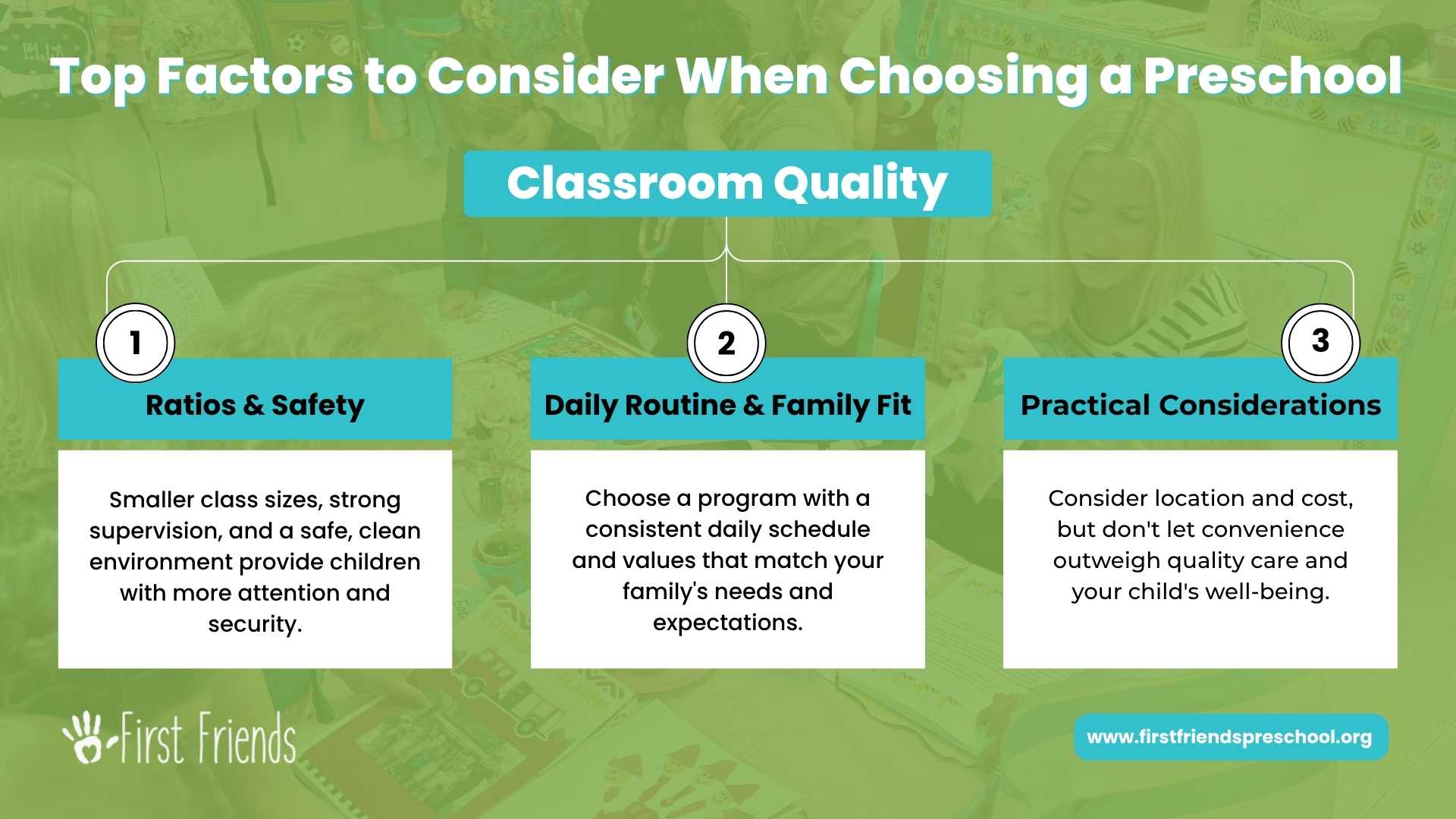
The factors that matter most are the people, the ratio, the safety setup, the daily rhythm, and the value fit. Everything else is secondary.
Start with the teachers, because they are the program. Watch how they speak to children. Are voices warm and patient, or sharp and rushed?
Ask how long the lead teachers have been there. Low turnover usually points to a school that treats its staff well, and staff who feel supported tend to show up better for kids. A teacher who has been in the same room for several years knows the small tricks that calm a crying toddler and the signs that a quiet child is struggling. That kind of steady, familiar care is hard to fake and easy to lose when staff churns through every few months.
Next is the adult-to-child ratio. Fewer children per teacher means more attention, faster comfort when a toddler is upset, and closer supervision. Texas sets minimum ratios by age, but many strong programs choose to staff better than the minimum. The difference between one teacher for eleven four-year-olds and one teacher for eight is something you can feel in the room. With more hands, kids get read to in smaller groups, get help in the bathroom faster, and rarely sit ignored.
Then look at safety, cleanliness, and the daily routine. A predictable rhythm of play, snack, outdoor time, story, and rest helps young children feel secure. Kids this age relax when they know what comes next, and a chaotic or constantly shifting schedule tends to produce more meltdowns. Finally, weigh whether the school’s approach and values line up with what you want at home. A place can score high on paper and still feel wrong if the philosophy clashes with your family.
Price and distance round out the list. A shorter drive helps on the hard mornings, and a budget that works keeps the choice sustainable. Just do not let those two push the people-and-safety factors out of first place. A cheaper, closer school that leaves your child anxious every morning is no bargain. Weigh the whole picture, and let the daily experience of your child carry the most weight.
What Questions Should You Ask on a Tour?
Ask questions that reveal how the school actually runs on a normal Tuesday, not just how it markets itself. The best preschool tour questions dig into staffing, safety, communication, and daily life.
Here is a practical list to bring with you:
- What is the adult-to-child ratio in my child’s age group, and how many children are in each class?
- How long have the lead teachers been with the school, and what training do they have?
- How do you handle discipline and big feelings like hitting or biting?
- What does a typical day look like from drop-off to pickup?
- How do you keep the building secure, and who can pick up my child?
- How do you communicate with parents day to day, and how do you handle illness or injury?
- What is your potty-training approach if my child is not there yet?
- How do you help a new child settle in during the first week?
- What meals or snacks are provided, and how do you handle allergies?
- What are your hours, holidays, and your policy when my child is sick?
Write down the answers as you go. By the third tour, the schools blur together, and your notes will save you. Watch the reaction to your questions, too. A school that welcomes hard questions and answers plainly is showing you something about how it treats parents.
A few follow-up questions can tell you even more. Ask what the school does when a child has a hard day and will not stop crying, because the answer reveals whether staff respond with patience or with frustration. Ask how teachers handle a child who bites or hits another child, since you want a calm, consistent plan rather than shame or punishment. Ask what happens when a teacher calls in sick, because the answer shows whether the ratio holds steady or quietly slips on short-staffed days. These small, specific questions cut through the polished tour script and show you the real culture.
What Are the Safety and Ratio Basics?
The safety basics come down to supervision, a secure building, clean spaces, and clear health rules. Ratio is the heart of supervision, so it deserves real attention.
In Texas, licensed child care follows minimum staff-to-child ratios set by the state, and those ratios get tighter for younger children. Infants need far more hands than four-year-olds. Ask each school for its exact ratio and group size by age, and remember the minimum is a floor, not a goal. A program that staffs above the minimum is choosing to give your child more attention. Group size matters as much as ratio: two teachers with twenty-two children is a very different room than two teachers with sixteen, even though the ratio looks the same on paper. Smaller groups stay calmer and quieter.
Beyond the ratio, look for these safety signs as you walk through:
- Secure entry, so visitors cannot wander in, and parents can check in and out.
- A clear sign-in and pickup system that confirms who is allowed to take each child.
- Clean bathrooms, diapering areas, and handwashing are built into the routine.
- Childproofed rooms with covered outlets, anchored furniture, and gates where needed.
- Outdoor play space with soft surfaces under climbing equipment and shade.
- Posted emergency plans and a current license on display.
Ask how the school handles a fever, an allergic reaction, or a fall. You want to hear calm, specific answers, not vague reassurance. A strong program can tell you exactly who is trained in CPR and first aid, where the records are kept, and how quickly they would reach you. Confirm that the program is licensed and ask whether you can see the inspection history. A school proud of its record will share it without hesitation. You can also look up a center’s licensing record and any past violations through the state’s child care search, which gives you an outside read to set beside what you hear on the tour.
How Do You Judge Curriculum and Values Fit?
Judge a curriculum by whether it fits how young children actually grow, which is through play, movement, songs, stories, and hands-on exploration. At this age, a heavy worksheet load is a warning sign, not a selling point.
Ask the school to walk you through its approach. Good early childhood programs build the day around play that quietly teaches early reading, counting, sharing, and problem solving. Children should be talking, building, painting, moving, and asking questions, not sitting still for long stretches. Ask how the school supports a child who is ahead and one who needs more time, since real classrooms hold both. A thoughtful answer might describe how a teacher gives an advanced child a bigger challenge during a counting game while sitting beside another child who needs a little more help with the same task.
Values fit is the other half. Think about what you want your child to be surrounded by during the day. Some families want a faith-based preschool where character, kindness, and simple spiritual lessons are part of the routine.
Others want a strictly secular setting. Neither is right nor wrong, but the program should match what you practice at home, so your child is not getting mixed messages. Ask directly how the school teaches kindness, handles conflict between kids, and builds character. The answer tells you a lot about the daily culture.
For families in Prosper and the surrounding towns, you will find a real range, from play-based to more structured, and from faith-centered to secular. The point is not to chase the most academic-sounding option. It is to match the program to your child and your family. A shy child may bloom in a small, gentle room and shrink in a big, loud one, while a busy, social child may thrive in the opposite setting. You know your child better than any brochure does, so read each program through that lens.
How Much Should You Trust Your Gut on the Visit?
Trust your gut a lot, as long as you pair it with the checklist. Your instincts pick up on things a list cannot, like the mood of a room or the energy of a teacher, and those signals are real data.
When you walk in, notice the feeling first. Do the children seem busy and content, or restless and ignored? Are teachers down on the floor, eye to eye with kids, or standing back and watching the clock? Listen to the volume. A healthy preschool has a happy hum, not constant crying, and not eerie silence. Watch one teacher with one child for a full minute, and you will see more than any brochure can tell you.
Picture your own child in that room. Can you see them walking in, finding a spot, and settling? If something feels off and you cannot name it, that is worth respecting.
Visit again at a different time of day if you are torn. Drop-off and late afternoon show you different sides of a program; mornings are fresh and busy, while late afternoons reveal how staff hold up when everyone is tired. The school that checks the boxes and feels right when you stand in the doorway is usually the one. Combine the head and the heart, and you will land in a good place.
Putting It All Together
You do not need to score every school perfectly. You need a short list of two or three you would feel good about, then a clear winner based on the people, the ratio, the safety, the daily routine, and the fit with your family. Tour in person, ask the hard questions, take notes, and pay attention to how the visit feels. Loop in your partner or a trusted friend for a second read, since a fresh set of eyes often catches what you miss when you are tired and overwhelmed. The right preschool is the one where your child will be safe, known by name, and happy to walk in the door.
Ready to See a Classroom in Person?
The best way to decide is to stand in a room and watch it work. At First Friends Preschool, we welcome families from Prosper and nearby Celina, McKinney, Frisco, Little Elm, and Aubrey to come see a typical day, meet our teachers, and ask every question on your list. We would love to show you around and help you find the right fit for your child.
Frequently Asked Questions
At what age should my child start preschool?
Most children start preschool somewhere between two and four years old, depending on the program and the family. Some schools offer toddler classes earlier, while others begin at three. The right time depends on your child’s readiness for short separations, their interest in other kids, and your family’s schedule. There is no single correct age, so pick the start that fits your child.
How many preschools should I tour before deciding?
Try to visit at least two or three. Touring more than one gives you something to compare, so you can tell the difference between a standout program and an average one. Bring the same list of questions to each visit and take notes, since the schools blur together quickly. If two feel equally strong, a second visit at a different time of day often breaks the tie.
What is a good adult-to-child ratio for preschool?
Younger children need more adults per child, so infants and toddlers have much tighter ratios than four-year-olds. Texas sets minimum ratios by age group, and a strong program often staffs above that minimum. Ask each school for its exact ratio and class size by age, and treat the state minimum as the floor rather than the target you are hoping for.
What should I look for during a preschool tour?
Watch how teachers talk to the children, whether the kids seem busy and content, and how clean and secure the space is. Check the entry system, the bathrooms, the outdoor play area, and the daily routine. Ask about ratios, teacher turnover, discipline, and parent communication. Most of all, notice how the room feels and whether you can picture your child happy there.
Does a preschool need to be faith-based?
No. The best choice is the one that matches your family. Some parents want a setting where kindness, character, and simple spiritual lessons are part of the day, while others prefer a secular program. Both can be excellent. What matters is that the school’s values line up with what you practice at home, so your child gets a consistent message.